
AI will do everything for you but you'll still be stuck with yourself
Why where you're looking right now matters now more than ever

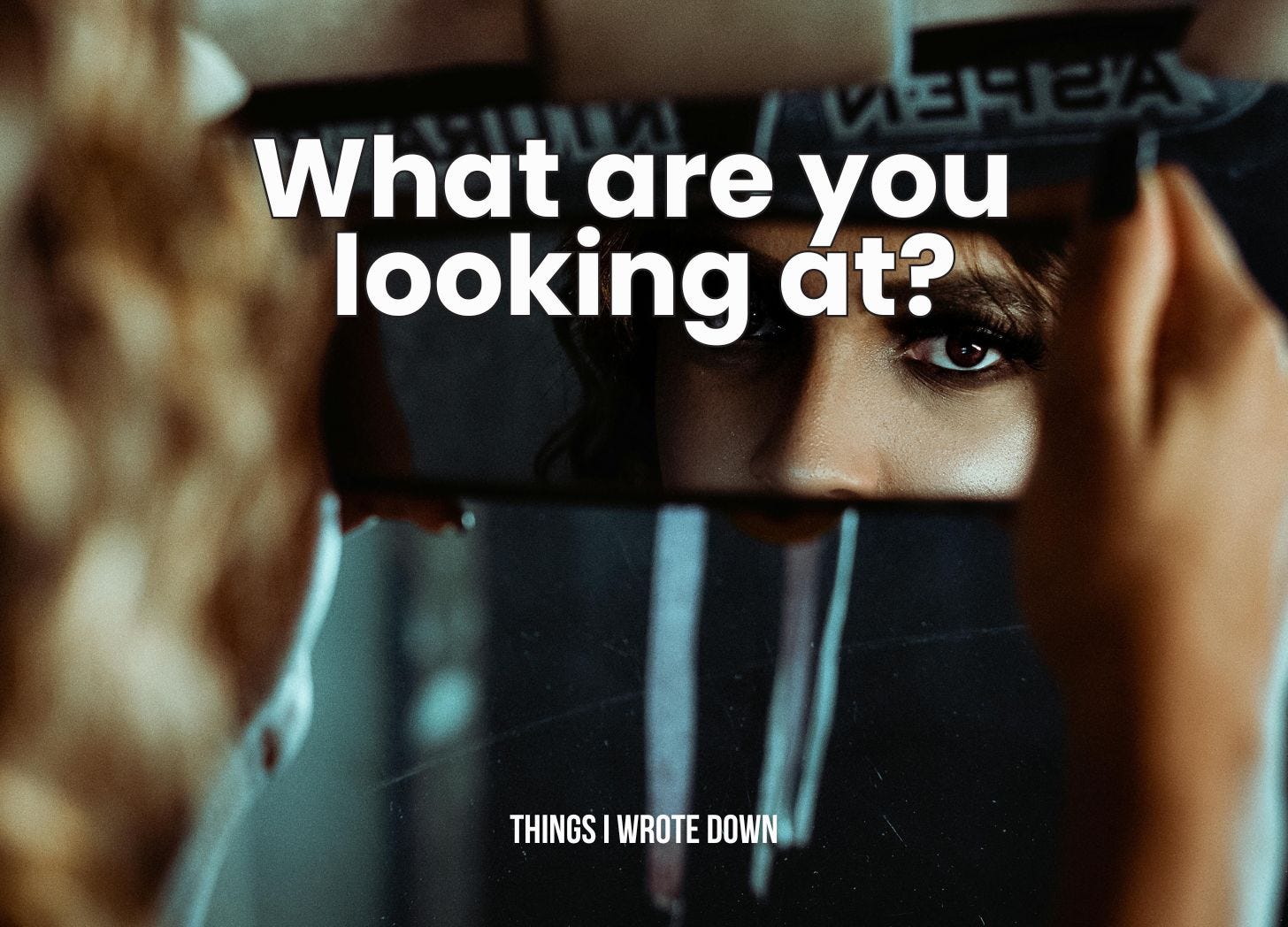
As I launch into my latest quest—studying up on the Holy Spirit to make the case that AI will never replace it, and this, despite the growing evidence showing that AI, social media, chatbot, and algorithm engagement is outpacing prayer as a daily habit—I, of course, am starting the journey where all such quests make sense to begin. The book of Acts.
The famous letter, written by the Greek physician Luke, has captured imaginations for thousands of years, including the year of our Lord 2026. It’s soon to become what some film insiders predict will the biggest faith-based film of all time, when it comes to theatres in two parts, as imagined by Mel Gibson, his follow up to the Passion of the Christ, the current top faith-based film. The project has taken the Hollywood star nearly eight years to write.
Like Mel, Luke took time to get things right. He compiled and notated for at least thirteen years when he became an official part of the narrative on Paul’s missionary journey to Europe (Acts 16:11, in 49 AD) and observed events first-hand until Paul’s imprisonment in Rome in 60 through 62 AD. The rest of his writing looks back more than fifty years to the origin story of John the Baptist.
His well-research books are, as G. Campbell Morgan notes, the work of a scientific mind and of an artist. These two elements, rarely combined, bring forth rich factual and poetic insights in his Gospel and in Acts:
“There is an old legend of the Church that a painting of the Virgin Mother was found in Jerusalem from the brush of Luke. The early church writers all spoke of him as an artist. Somebody has said that he was a poet, too, and gives as a proof, that he caught and preserved for us the great songs that burst upon the world with the coming of Jesus into it” (Elizabeth’s song, Mary’s Magnificat, and the song of Zecheriah).
~ from The Gospel According to Luke, G. Campbell Morgan, Fleming H. Revell Company, New Jersey, 1931.
When I consider Luke’s writing as the writings of a man of science, someone curious and attentive to the facts of the world, to the bodies, and the elements around him; when, also, I recognize how he is attuned to the beauty in the created world with its mysteries and peculiarities, his writings come alive for me in a new way.
There is intent in everything he puts down on the page. Which makes me ask questions. Like this one:
Is it okay to get mad at angels?
As I started to read Acts this week, I was struck by a phrase. Imagine first the scene that Luke sets up for us. Jesus has recently risen from the dead. Which, of course, was not only the best news of all time, but seemed completely impossible.
The emotional whiplash the disciples suffered as their grief and despair flowered into joy, as the resurrection reality threw them at breakneck speed from the doom of the kingdom of darkness into the victory of God’s kingdom of light, would have been intense.
Just as soon as he returned the disciples to hope, Jesus was gone again. This time raised up, not on a cross, but on a cloud. Up, up he went. And they were all left behind, locked down by earth’s gravity, staring at the sky.
It’s then that two men dressed in white appeared. Angels. Beings that typically look down from the clouds to the earthbound creatures they serve and protect. Their question perplexes, surprises, and disrupts the loaded human moment.
It’s like a record scratch over Handel’s Hallelujah Chorus and Leonard Cohen’s Hallelujah all at once.
“Why do you stand here looking into the sky?”
Luke reports that they both said it.
Was it in synchronous monotone that they asked? Or did they both ask it, separately and, therefore, repeatedly. The author doesn’t say.
Perhaps it was the kind of jarring, unprompted, statement people make when they walk the condolence line at a funeral. The obvious, unexpected words we’ve all said that we wish we could take back, reel like a fish on the hook to pull back into the swamp of our mouths. Their loved one just died and, by rote, I asked “how are you doing?!”
Maybe the words were written down by God himself on a celestial tablet, sent to the angel barracks, rehearsed by the two messengers, delivered in perfect pitch, revealing just how strange and foreign the ways of God can be for us on land.
However they entered the world, the words cut through the silence and surprise of the disciples, and they disrupt us these thousands of years later:
“This same Jesus, who has been taken from you into heaven, will come back in the same way you have seen him go into heaven.”
Luke doesn’t record a verbal response from the disciples to the heaven-sent question.
They return to Jerusalem without a word. They hunker down, in prayer, following Jesus’ command which proceeded his miraculous ascension and the angels’ strange, disturbing dialogue.
What are we looking at?
I can’t help but notice that the disciples who had just been in the presence of Jesus were left to look at vapour. An empty cloud with no substance, no spirit, that held nothing but air.
Jerusalem was where they needed to be. Awaiting the gift. Seeking not an answer from the empty void, but waiting for the source of life to fill them.
The angels’ question, though seemingly insensitive or tone deaf at first, was the precise redirection the dumbfounded and overwhelmed friends needed: You’re looking at the wrong thing and you’re not in the right place.
Anyone relate?
AI will do everything for you, but you’ll still be stuck with yourself
Forgive me for tying an observation from scripture into the current cultural obsession with artificial intelligence. In my defence, this new series of writing was prompted by a theme, comparing the powers of the Holy Spirit to the powers of AI. So bear with me.
I can’t help but imagine those disciples, slack jawed and bewildered, staring at the sky. In a blink their first-century woollen robes and sandals are traded for our sneakers and jeans, and like them, we’re standing mouths agape, feeling left behind.
If you jump online and connect to the spirit of information, the ever-present internet, there’s a question underneath almost everything: a fear, a concern. People are unsettled, worried they will be left behind in their jobs, their relationships, with an out-dated skill set, because of artificial intelligence. With nothing to offer, nowhere to work and no outlet to share creative ideas which are all replaced so easily by machines, what will we all do?
Depends where you look
People are using AI to imagine everything, do all the tasks.
How keenly do you feel this? Sometimes I’m hit with a wave of concern that I’ll be the only Luddite who didn’t use an LLM to automate, generate, or implement some new digital system or product.
Just like I missed crypto (and didn’t pay close enough attention to truly comprehend block chain) I’m unsettled by the sense that I’ll be left in abject poverty while all the AI entrepreneurs generate billions and build the walled-off world where they’ll live in opulence. A place where I won’t be welcome except as the human slave to stand in for their robots when they have scheduled maintenance.
There is a consequential, generational, historic shift in the market and in tech. There really is. We need to adapt with it. Sure.
But where we look matters now more than ever. Where we look leads us down certain pathways. One on a path pursuing vibe-code glory, another, through the guidance of chatbot voices, to doom. Still another to the quiet place where Spirit gives purpose and power to people stunned and surprised by the events of their times. People not necessarily sure what to do.
Even if we successfully leverage AI in every way, have it do everything for us, we are still left with ourselves, our inner worlds. Faced with our reality of our smallness, we’ll always need somewhere to turn. And no prompt on earth or online cloud can sort that out for us.
I’m no angel, but can I ask the obvious, disruptive question:
What are you looking at?
Just start (waiting for God to answer):
All of us have big questions about our future. About the past. About deep things others may not know and certainly cannot see. These questions may leave us staring at the sky, jaws slack, unsure about what to do.
Today I encourage you to just start asking God about it. Wait for his gift of wisdom and counsel that he wants to release to you. Start reading Acts 1 and put yourself in the place of the disciples. Take the advice of angels. What happens when you do?


I know your writing and you. You wouldn’t use AI. You are a wonderful person and an unique writer whom I enjoy reading. Using AI doesn’t mean you are a writer. I do write poetry and my feelings down in a journal when something comes to mind from God. I’m not a good communicator like you though. I look forward to receiving emails from you.
So true. The ascension was in my readings this week too, the moment totally caught my attention as well. Similar to the angels matter of factness in the garden tomb, ‘why do you seek the living among the dead?’ Almost an Oswald chambers esque directive reflecting on the same Jesus after the Transfiguration…‘Heaven and the mountaintop is great and will come fully in time. For now we must focus on the demon possessed valley. Much work to be done on earth first!