
Will Your Church Become a Museum in 20 Years?
The Biblical Antidote in 2 Timothy That Keeps the Flame Alive

Last week I took my kids to a local event highlighting the heritage of our town. There were tables in the gym at our little community centre made into temporary booths—cardboard displays and photo-covered backdrops—telling the story of the region.
Railroad museums, war regiments, historic sites, knick knacks and artifacts, a mock pioneer town sharing “the way they made things” back then. I came out of the event with a plan for all the walnuts that fall on our property. (First I’ll have to fight off the squirrels with the kids this summer to stockpile our own stash of the black nuts. Then I’ll boil them down to make ink and use the turkey feathers we’ll find as quills.)
I also left with something akin to shock.
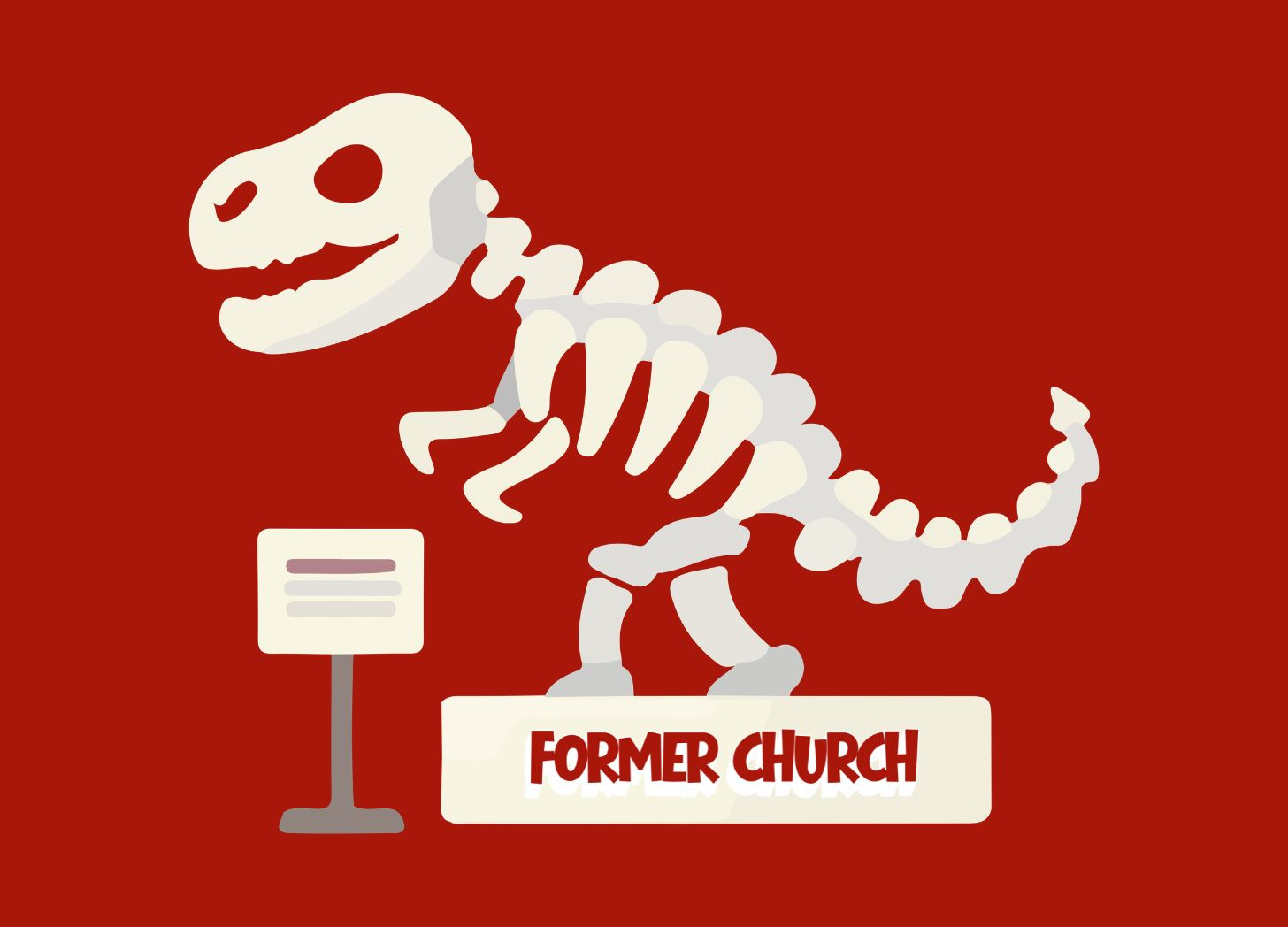
One of the booths was for an effort of the Presbyterian church. The kind man at the table and I had a nice chat. It took me most of the conversation to realize (as I shared stories of my grandpa, a minister in the denomination who helped plant churches, bring Hungarian refugees to Canada, build community, and travel the nation to teach from the pulpit) that I was at a display for a museum. He collects artifacts and other material to display what the once main and largest denomination in Canada was.
Past tense.
Something that was vibrant, essential, growing in Canada and around the world has dwindled. It is a thing of the past.
I mentioned how I have a box of my grandfather’s sermons, some that I’ve transcribed and digitized, preserved. When I asked if the denomination might have interest in them, he noted that the archivist can no longer keep up. This is a story across Canada: a minister in the family dies, the kids want to get rid of the sermons, but with so many pastors dead with a box of sermons, the archivist has stopped trying.
Kingdoms rise and fall. Denominations die out. Pastors and sermons are buried and forgotten. Nothing new here, this is the story of humanity.
The man couldn’t have been kinder. I don’t want to throw shade on him or his efforts. They’re noble. The work of documenting and remembering history is important. Outwardly I help up my end of the conversation with genuine curiosity. Inwardly I was having what I think experts call a spiritual stroke.

Dead or alive?
Are we in a time where we just document history or are we making it?
Psalm 146 slaps back hard with an answer to this question (I transcribed it recently). These lines left a pink mark on my face in the shape of a handprint where the blood vessels burst:
Do not put your trust in princes,
in mortals, in whom there is no help.
When their breath departs, they return to the earth;
on that very day their plans perish.
~ Psalm 146:2-4
The conversation with the Presbyterian museum guy wasn’t about keeping the church alive. It was about keeping a record so that people don’t forget about this particular denomination that is now dead or dying.1
Gulp.
As I reflected on the experience this week, I’ve had a profound sense of clarity, feel free to call it panic: I don’t want to be part of a dying church, a social club that exists to raise money for activities while the members are alive and for which they set up a fund to eventually erect a remembrance for once glorious but no longer functional operations.
I don’t want my church to become a museum.2
But honestly? That’s how it goes.
The apostle Paul felt this keenly. At the end of his life, suffering in jail, he writes a letter to Timothy, who he’s left in Ephesus to lead the church there. The letter is his effort to officially pass the torch of the gospel—the essence of his ministry—to one of his closest friends whose been in the battle for faith with him over the years. For the sake of a great city where God did great things.3
And you know what? Paul’s letter ain’t pretty.
The letter isn’t a warm, fuzzy benediction or a highlight reel of all the good times. It’s a desperate, furious cry of the heart. Paul is suffering, physically, in jail and emotionally near despair. Most people have abandoned him. Ministry partners have duped and dumped him. He appeals to Timothy in what we could confuse as hyperbole because we don’t live in the daily desperation of spreading the good news with one eye on the fires of hell raging all around us and one eye on eternity like Paul did.
There is a real sense that all his efforts to proclaim the truth and build the church could be lost in Ephesus where the message is being watered down, perverted and changed.
Paul doesn’t have that uniquely terrible Canadian quality of self respect, that masked embarrassment pretending to be sage humility that ensures he quietly enters his tomb and dutifully steps into the afterlife without a whimper (or the help of a cocktail of drugs administered by his doctor, quietly hoping he’ll meet his maker or there is no maker to meet).
Instead, he goes loudly and he doesn’t wait until he’s on his deathbed to shout out in characteristic moral or spiritual clarity. He crashes through the world, ringing alarm bells and calling the dead into life, changing tones and presentation tactics just as he changes audience—courtrooms, synagogues, watercoolers, mobs. But always with the clear, confident language of the good news.
It’s quite a thing to read the letter to Timothy and to realize what he says. You get a real sense that almost all will abandon the faith. It’s sobering, terrifying, real. I remember reading that—really reading that—years ago in Malaysia as I studied scripture verse by verse and being so sad, shocked, rattled.
But this sweet line of truth emerges and forms into a hinge that swings open a door of hope and possibility and, quite truly salvation, as Paul confesses:
if we are faithless, he remains faithful—
for he cannot deny himself.
~ 2 Timothy 2:13
The quote recalls the passage in Numbers when the pagan soothsayer Balaam, hired by a local king realizes that he can’t curse God’s people as he’s been paid to do. He can only bless them, he realizes in a supernatural way (with the help of an observant donkey) that God is not a human being; what he has promised he fulfills, and he is always faithful.
God will be faithful; will we?
It’s a brutal, punishing question in a way. Do we feel immediately defensive or exposed when asked it?
Paul in his letter to the timid (and understandably intimidated Timothy) is passing on the torch. Perhaps it’s a baton. One generation dies. Another must carry on. We are the plan, from age to age, to keep the flame alive. As kingdoms rise and fall. As empires bomb and sabre rattle. Generation after generation. It is us who will extend the relay race.

We can flame out. And we can drop the baton and disqualify the whole team.
I left the community centre after my Presbyterian museum conversation the way I leave the book of Timothy asking God what he’s doing, entrusting his message with us. It’s too risky!
And it would feel completely bleak if it weren’t for a surprising glimmer of light that shines so brightly through the letter of the pages and across all of human time. There will always be someone who carries the torch and does not drop it.
How? Why?
It’s not a matter of technique, human performance, or a crazy level of discipline and observance. It boils down to revelation. God knows who he is and he is so good, faithful, gracious and holy. He knows who he is and that no matter what, there will always be people who recognize and experience his nature and respond to it.
Psalm 145 describes this very thing, just a few verses before the scripture shared above that highlights how the plans of men die with them. Paul seems to echo and enact this sentiment in his earnest scrawl from prison:
One generation shall laud your works to another,
and shall declare your mighty acts.
On the glorious splendor of your majesty,
and on your wondrous works, I will meditate.
~ Psalm 115:4-5
No matter where they are or what they face, there are people who will encounter God, an experience that so impacts the nature of the human heart, completely transforming it and shaping it, that those people will say the simple yes and walk forward, knees often trembling, carrying the torch that lights the way in the dark, the baton that sends the next generation forward in the race of faith.
I really, truly want to be one of them.
I’m hoping a Presbyterian from a vibrant congregation (which I’m sure there are) will loudly and vitally object!
I’m so grateful to report that I am, in fact, not at a church like this. We’re part of a church where God is moving and lives are changing as they encounter truth, grace, power.
See Acts 19 as but one example.
Leaves one quaking and in awe of God whose plans never fail!